The Future of Marketing in the Age of Artificial Intelligence
Artificial intelligence is rapidly transforming how organizations communicate, engage with audiences, and develop marketing strategies in today’s digital environment. What was once considered an experimental technology has now become a core part of digital marketing and communication practices. AI tools allow companies to analyze large amounts of data, automate content creation, personalize customer experiences, and predict consumer behavior more accurately than traditional methods. As businesses increasingly rely on digital communication to connect with audiences, understanding how AI shapes marketing strategies is becoming an essential skill for modern communication professionals.
The Evolution of AI in Marketing
The use of technology in marketing has evolved significantly over the past several decades. Early digital marketing strategies relied heavily on email campaigns, search engine optimization, and basic data analytics. However, advancements in artificial intelligence have allowed marketers to move beyond simple data collection and toward predictive analytics, automation, and intelligent personalization. According to Huang and Rust (2021), artificial intelligence is transforming service and marketing systems by enabling organizations to analyze customer behavior and automate communication processes at a much larger scale. Similarly, Dwivedi et al. (2021) note that AI technologies are creating new opportunities for innovation in marketing while also raising questions about transparency, data ethics, and consumer trust.
The Impact of AI on Modern Communication
Artificial intelligence is not only changing how marketing operates but also how communication itself is structured. AI allows organizations to analyze audience behavior in real time, personalize messaging, and automate interactions at a scale that was not previously possible. This shift has changed communication from a one-size-fits-all approach to a highly targeted and data-driven process. According to Dwivedi et al. (2021), AI technologies are reshaping how businesses interact with consumers by enabling more adaptive and responsive communication strategies.
At the same time, this shift introduces new challenges. Communication professionals must now consider issues such as transparency, data privacy, and ethical messaging. While AI improves efficiency and personalization, it also raises questions about how much automation is appropriate and how to maintain authenticity in digital interactions. Because of this, professionals in the field must balance innovation with responsibility when using AI-driven tools.
Multimedia Example
Marketing School Podcast – “10 Ways AI Is Actually Changing Marketing”
Listen to the episode here:
https://podcasts.apple.com/us/podcast/10-ways-ai-is-actually-changing-marketing/id1138869817?i=1000746699965
This podcast episode gives a practical example of how AI is already being used in marketing through personalization, automation, and data analysis.
Video Example: AI Marketing Basics
AI Marketing 101 – Beginner’s Guide to AI in Marketing
Watch the video here:
https://www.youtube.com/watch?v=RmcwvtMmP3Q
This video provides a clear and accessible overview of how artificial intelligence is being used in marketing, including automation, personalization, and data-driven strategies. It helps reinforce how AI is actively shaping modern communication practices.
Infographic: AI in Marketing
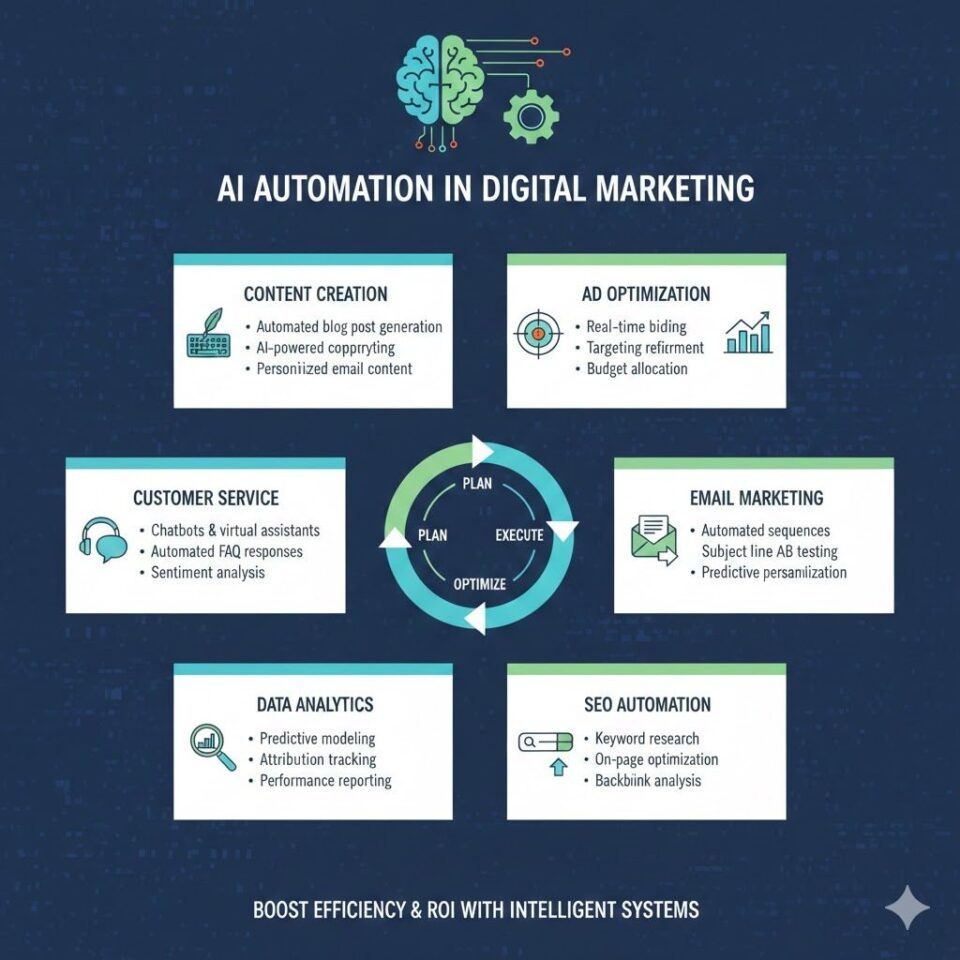
This infographic highlights how artificial intelligence is used in marketing through personalization, predictive analytics, and automation. It provides a visual summary of how AI helps organizations better understand audiences and improve communication strategies.
Source: eLearning Infographics (2026)
About the Author
This webpage was created by Sumer as part of a communications research project focused on emerging digital media trends. As a communications professional with experience in both technology and AI-related work, I am particularly interested in how artificial intelligence is reshaping the way organizations communicate with audiences. My goal is to explore these changes in a way that is both informative and accessible while maintaining ethical and responsible communication practices.
Ethical Content Curation
All research and multimedia included on this page are credited to their original creators. Scholarly sources and reputable industry materials were selected to ensure the information is accurate, balanced, and responsibly curated.
References
Dwivedi, Y. K., et al. (2021). Artificial intelligence (AI): Multidisciplinary perspectives on emerging challenges, opportunities, and agenda for research, practice and policy. International Journal of Information Management, 57. https://doi.org/10.1016/j.ijinfomgt.2019.08.002
eLearning Infographics. (2026). Use of AI automation in digital marketing [Infographic]. https://elearninginfographics.com/use-of-ai-automation-in-digital-marketing/
Exposure Ninja. (2023, March 27). AI marketing guide for beginners (in 16 minutes!) [Video]. YouTube. https://www.youtube.com/watch?v=RmcwvtMmP3Q
Huang, M.-H., & Rust, R. T. (2021). Artificial intelligence in service. Journal of Service Research, 24(1), 3–21. https://doi.org/10.1177/1094670520902266
 thehiddenblueprint.blog